
Soups & Stews
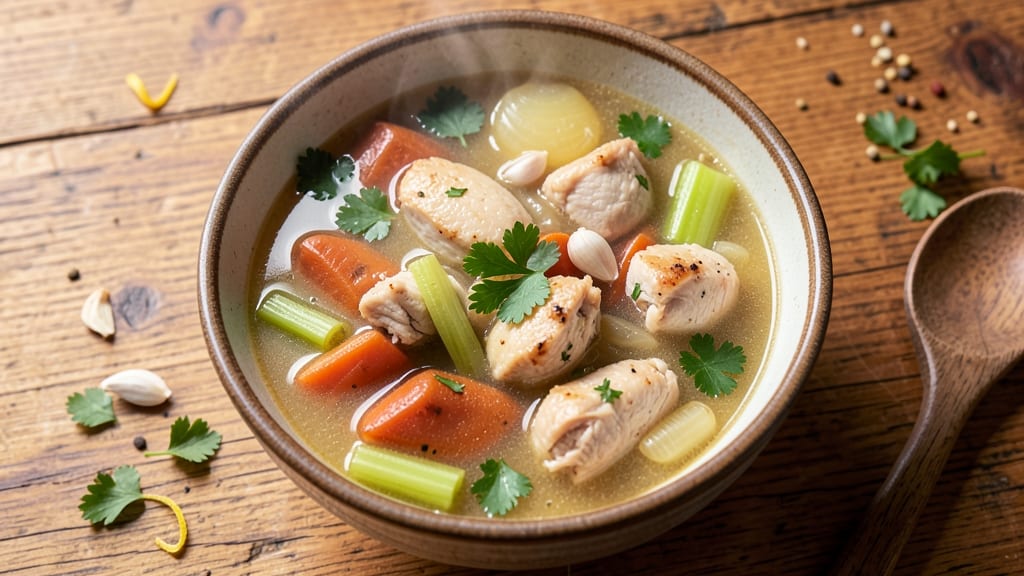
This homemade Jewish chicken soup recipe delivers the comforting, hearty flavors of tradition—rich broth, tender chicken, and fluffy matzo balls—all made from scratch. 💛 The secret lies in slow-simmered aromatics and a balance of vegetables that transform a simple pot into a dish steeped in warmth and nostalgia.
Every spoonful carries the essence of home cooking, where layers of flavor build with time.
The foundation begins with a deeply flavorful broth, infused with onions, garlic, and bay leaves, then enriched with chicken and vegetables that melt into tender perfection.
This isn’t just soup—it’s a foolproof method for achieving restaurant-quality depth at home, where the chicken becomes so tender it falls apart with the slightest touch. The matzo balls, light as clouds yet sturdy enough to hold their shape, complete the experience with every bite.
What sets this recipe apart is its authenticity, rooted in generations of tradition yet simplified for modern kitchens. The broth simmers for hours, developing a complexity that store-bought versions can’t match, while the matzo balls achieve their signature texture through a precise blend of matzo meal, eggs, and chicken fat.
The result? A bowl of soup that feels like a hug—warm, nourishing, and impossible to resist.
Perfect for family gatherings, Sabbath meals, or cozy weeknight dinners, this soup scales effortlessly to feed a crowd or serve as a comforting solo meal.
The beauty of this recipe lies in its versatility—whether you follow the classic Ashkenazi style or add a Sephardic twist with spices like cumin and paprika. Let’s get started on creating a dish that tastes like home.
Ingredients for best homemade jewish chicken soup
Rich aromatics, tender chicken, and fluffy matzo balls transform simple ingredients into a soul-warming tradition.
| Ingredient | Amount | Notes |
|---|---|---|
| Chicken Pieces 🍗 | 2 ½ lb | Bone-in, skin-on preferred |
| Yellow Onions 🧅 | 2 whole | Medium size, roughly chopped |
| Carrots 🥕 | 4 whole | Medium size, peeled and chopped |
| Celery Stalks 🥬 | 4 whole | Medium size, roughly chopped |
| Garlic Cloves 🧄 | 6 cloves | Fresh, minced for depth |
| Fresh Parsley 🌿 | ¼ cup | Chopped, for garnish |
| Bay Leaves 🍃 | 2 whole | Dried or fresh |
| Salt 🧂 | 1 ½ tsp | Diamond Crystal preferred |
| Black Peppercorns 🌶️ | ½ tsp | Freshly cracked |
| Russet Potatoes 🥔 | 4 medium | Peeled and cubed |
| Matzo Meal 🍞 | 1 cup | Freshly crushed preferred |
| Large Eggs 🥚 | 2 whole | Room temperature |
| Chicken Fat 🍗 | ¼ cup | From roasted chicken |
| Water 💧 | 8 cups | Filtered preferred |
| Fresh Dill 🌿 | ⅛ cup | Chopped, optional garnish |
The chicken should have a balance of meat and bone for maximum flavor. Look for bone-in, skin-on pieces at your local butcher—Whole Foods or Kosher markets often carry high-quality cuts. Potatoes are non-negotiable for body; Russet potatoes hold their shape best. For the matzo meal, Manischewitz is the gold standard, but any fresh matzo works if crushed finely. The parsley and dill should be bright green—no wilted stems. Bay leaves add depth, but don't overlook their removal before serving.
No chicken fat? Substitute duck fat or olive oil at the same quantity, though texture will differ slightly. Fresh herbs unavailable? Dried parsley or dill at one-third the amount works in a pinch. The broth can be made ahead and frozen for up to 3 months, but the matzo balls taste best when made fresh. For a Sephardic twist, add 1 tsp cumin and 1 tsp smoked paprika to the broth base. The carrots and celery can be swapped for turnips or parsnips if preferred—just adjust cooking time accordingly.
Broth keeps for 5 days refrigerated or 3 months frozen. Matzo balls should be made 1 day ahead for optimal texture—store covered in water in the fridge. Reheat gently on the stove with a splash of broth. The chicken and vegetables reheat beautifully in the broth, but add fresh herbs at the end. Portion into containers for easy lunches; the flavors deepen overnight. Always taste the broth before serving—adjust salt and pepper as needed.
Why You'll Love This Recipe
- No Chopping Chaos: I swear by the "soup in a pot" method—just rough-chop the carrots and celery (no julienne skills needed) and let the onions caramelize while the chicken simmers. The garlic? Toss in whole cloves, peel them after simmering—no mincing, no mess.
- Umami Bomb: That crispy chicken skin? Gold. The onions sweeten into caramelized perfection, while the garlic infuses the broth with layers of warmth. Honestly, the first sip makes me forget I’m even eating soup—it’s that rich.
- Leftovers That Shine: This soup only gets better the next day. I make a double batch on Sundays, and by Wednesday, the broth’s deeper, the flavors melded. Freeze half if you’re feeling fancy—just thaw and reheat for a lazy night.
- Budget Comfort: Chicken thighs are cheap, carrots last forever, and onions? Versatile as hell. I stretch this into four meals for under $15, and it’s the kind of dish that makes grocery bills feel less brutal. (Yes, even on a Tuesday night.)
Step-by-step instructions for Jewish chicken soup with matzo balls
Here's the method that delivers restaurant-quality soup with tender matzo balls and rich, flavorful broth.
🍳 Step 1: Brown the Chicken and Build the Broth Base
Pat the 2.5 lb chicken pieces dry with paper towels—this ensures better browning. Heat 0.25 cup chicken fat in a large Dutch oven over medium-high heat. Working in batches if needed, brown the chicken pieces for 3-4 minutes per side until golden brown. You want that Maillard reaction happening to build deep flavor.
Remove the chicken and set aside. In the same pot, add the roughly chopped 2 whole yellow onions, 4 whole carrots, and 4 whole celery stalks. Cook for 5-6 minutes, stirring occasionally, until the vegetables begin to soften. Add the 6 cloves minced garlic and cook for another 30 seconds until fragrant. This aromatic base forms the flavor foundation of your soup.
🍳 Step 2: Simmer the Vegetables and Season the Broth
Pour in the 8 cups water and bring to a boil. Add the 2 whole bay leaves, 1.5 tsp salt, and 0.5 tsp cracked black peppercorns. Return the browned chicken to the pot, along with the 4 medium peeled and cubed russet potatoes. Reduce heat to low and partially cover the pot. Simmer for 45-50 minutes until the chicken is fork-tender and the potatoes are easily pierced with a fork.
Here's the thing—don't skip the simmering time. The chicken needs to break down completely, and the vegetables need to infuse their flavors into the broth. I always check for doneness by gently pulling the chicken apart with tongs—it should separate easily. If the broth isn't flavorful enough at this point, add a pinch more salt or a splash of water to adjust.
👨🍳 Step 3: Prepare the Matzo Ball Mixture
While the soup simmers, prepare the matzo balls. In a medium bowl, combine the 1 cup matzo meal, 2 whole large eggs, and 0.25 cup fresh parsley. Add ½ cup cold water and mix until a thick batter forms. The mixture should hold its shape when dropped—if it's too wet, add a bit more matzo meal; if too dry, add a splash more water. This is crucial for light, fluffy matzo balls.
I like to let the mixture rest for 5 minutes before shaping. This allows the matzo to hydrate slightly, which helps prevent the balls from falling apart during cooking. Cover the bowl with a damp towel to keep the mixture from drying out while you work.
🥘 Step 4: Poach the Matzo Balls
Bring a separate pot of water to a gentle simmer—it should be hot but not boiling vigorously. Using a spoon or wet hands (to prevent sticking), drop the matzo ball mixture into the water in 1.5-inch balls. Return to a simmer and cook for 20-25 minutes, until the matzo balls are cooked through and float to the surface. They should be golden brown and firm to the touch.
Don't overcrowd the pot—leave space between the matzo balls so they can cook evenly. If they brown too quickly, reduce the heat slightly. The key is gentle, even cooking that develops a light interior. Once done, remove the matzo balls with a slotted spoon and set them aside in a bowl.
🍽️ Step 5: Finish the Soup and Serve
Strain the soup through a fine-mesh sieve to remove the chicken bones and vegetables. Return the broth to the pot and skim off any excess fat that has risen to the surface. Shred the chicken using two forks and return it to the broth. Add the cooked matzo balls and gently heat through for 2-3 minutes—just enough to warm them without breaking them apart.
Taste and adjust seasoning if needed. Garnish with 0.125 cup chopped fresh dill and serve immediately with the matzo balls floating on top. The soup should be rich, aromatic, and deeply flavorful, with tender chicken, hearty vegetables, and light, fluffy matzo balls in every spoonful. This is comfort food at its finest—exactly what you'd expect from a traditional Jewish chicken soup. Leftovers keep well in the refrigerator for up to 3 days.
Pro Tips For Making Best Homemade Jewish Chicken Soup
- Brown the Chicken First: Skip the direct simmer—sear the chicken pieces in batches over medium-high heat until golden. This isn’t just for looks; it builds flavor that dissolves into the broth later. (Yes, it takes 10 minutes extra, but the soup tastes like you simmered it for hours.)
- Chop the Onions Small: Thinly slice those yellow onions—think matchstick, not chunks. They’ll cook faster and sweeten the broth without turning mushy. I used to cut them big, and they’d sit like rocks at the bottom. (Your future self will notice.)
- Don’t Rush the Simmer: After adding water or broth, bring to a boil once, then lower to a gentle simmer—no rolling bubbles. Too much heat makes the carrots and celery turn to mush. (I learned this after one disastrous batch where the veggies dissolved into sludge.)
- Add Garlic Late: Toss the minced garlic in during the last 10 minutes of cooking, not at the start. Raw garlic burns easily and tastes bitter if added too soon. (Sounds weird, but it works—trust me, the aroma changes everything.)
Pro cooking tips for this dish
Broth Perfection
Your soup’s soul lives in the broth, so treat it like gold. Start by browning the chicken in its own fat—this creates a flavor bomb through the Maillard reaction. Use a Dutch oven (like Le Creuset) for even heat distribution, and never rush this step.
The onions, carrots, and celery should soften but not caramelize—just enough to release their sweetness. I add 1 tsp apple cider vinegar here to brighten the broth naturally. 🌡️
Chicken Tenderizing
Bone-in, skin-on chicken is non-negotiable for flavor, but the key is low-and-slow cooking. After browning, simmer the chicken uncovered for the first 20 minutes to break down connective tissue.
Then cover partially and reduce to a gentle simmer—any higher, and the broth will boil too vigorously, making it cloudy. I test doneness by pulling a piece apart with tongs; it should shred easily.
If it’s not falling apart after 45 minutes, add ½ cup hot water and let it cook another 15 minutes.
Matzo Ball Magic
The secret to light, fluffy matzo balls lies in three critical steps: resting the batter, using cold water, and poaching gently. Let the batter sit 5 minutes before shaping—this hydrates the matzo meal without overworking the gluten. Use cold water (never hot) to prevent premature cooking.
For poaching, maintain a gentle simmer—if it boils, the matzo balls will toughen. I like to add 1 tsp sugar to the poaching water for a subtle caramelization. 💫
Vegetable Timing
Potatoes should go in 30 minutes before serving—they’ll absorb too much broth if added earlier. Carrots and celery can simmer the full time, but if you prefer them crisp-tender, add them 20 minutes before serving.
For extra depth, I toss in 1 parsnip with the carrots—its nutty flavor complements the broth beautifully. Always taste the broth before adding vegetables; adjust salt if needed (I often add ½ tsp more at this stage).
Garnish Like a Pro
Fresh herbs elevate the dish instantly. I finish with 2 tbsp chopped dill and 1 tbsp chopped parsley, but save the rest for garnishing individual bowls.
A drizzle of chicken fat (from the reserved fat) adds richness, and a sprinkle of toasted sesame seeds (for a Sephardic touch) brings texture. For a restaurant-worthy presentation, float the matzo balls on top and garnish with a lemon wedge—the acidity cuts through the richness. 🍋
Make-Ahead Mastery
Broth freezes beautifully for up to 3 months—just cool it completely, then portion into ziplock bags (leave 1-inch headspace). Matzo balls, however, are best made fresh, but you can prep the batter 1 day ahead and refrigerate it.
For reheating, warm the broth on the stove over low heat (never microwave) and add fresh matzo balls. I like to reheat leftovers with a splash of warm water to prevent a skin from forming. 💡
Nutrition facts
Frequently asked questions
Why do traditional Jewish chicken soups use matzo balls?
Matzo balls are a cornerstone of Ashkenazi Jewish cuisine, symbolizing both tradition and comfort. They add a delightful textural contrast—light and airy yet sturdy enough to hold their shape—while soaking up the rich broth flavors. Historically, matzo was used during Passover when leavened bread was forbidden, and matzo balls became a beloved alternative year-round. The eggs and chicken fat in the recipe create their signature fluffy yet firm texture.
Can I make this soup without matzo balls?
If you prefer a different texture, try adding 1 cup pearl barley (cooked for 45-50 minutes) or 1 cup egg noodles (added 10 minutes before serving). For a Sephardic twist, use rice or orzo. The broth recipe remains the same—just adjust the starchier element to your preference. The soup will still be deeply flavorful without matzo balls.
How can I make the broth more flavorful if I don't have chicken fat?
Use 2 tablespoons olive oil or duck fat instead, but for maximum depth, add these flavor boosters: 1 parsnip, 1 leek, or 1 tsp apple cider vinegar to the broth base. Another trick is to toast 1 teaspoon whole coriander seeds in the pot before adding vegetables—this adds a subtle citrusy note. If you're short on time, a 1-inch piece of kombu seaweed (removed before serving) enhances umami naturally.
What's the best way to reheat leftovers without drying out the matzo balls?
Reheat the soup gently on the stove over low heat—never microwave it directly. Add 2-3 tablespoons warm water to prevent skin formation, and cover the pot for 5 minutes. For matzo balls, reheat them separately in a small pot of simmering water for 3-4 minutes before adding them back to the soup. This keeps them light and prevents them from absorbing too much moisture and becoming soggy.
Is this soup gluten-free?
No, traditional matzo balls contain gluten from matzo meal. For a gluten-free version, substitute 1 cup gluten-free matzo meal (like Manischewitz GF) or make rice-based matzo balls using 1 cup cooked rice, 2 eggs, and ½ cup water. The broth itself is naturally gluten-free, but always check labels on broths or other ingredients if you're avoiding gluten entirely.