
Main Courses
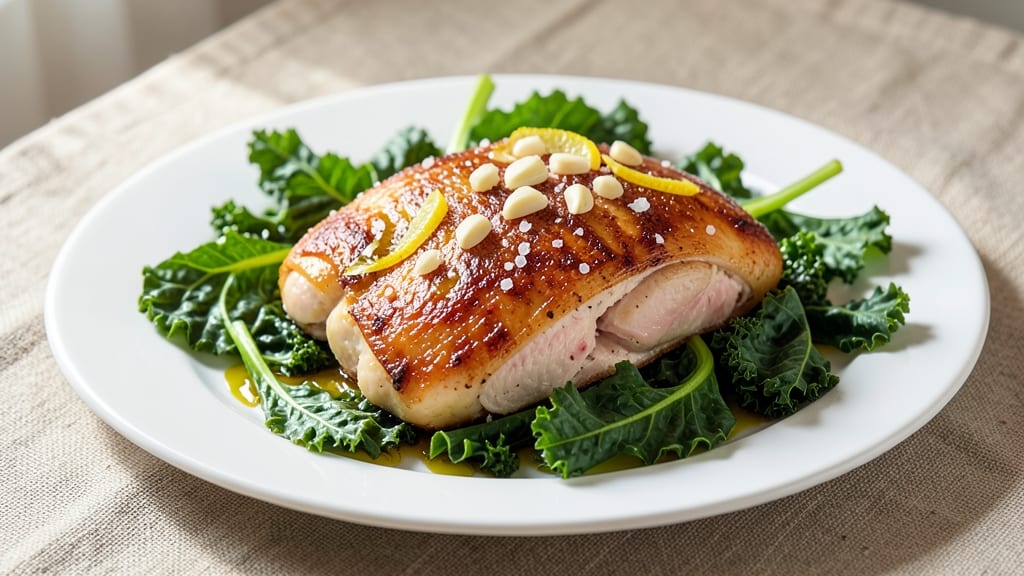
This baked chicken breast and kale recipe delivers restaurant-quality results with crispy golden skin and tender, juicy meat paired with vibrant greens. I perfected this dish after years of battling dry chicken breasts—no more rubbery texture here.
The secret? A simple marinade and high-heat baking technique that transforms ordinary chicken into a showstopper.
The magic happens when you sear the chicken skin first, creating that irresistible crispiness while keeping the inside perfectly tender. Kale adds earthy depth without overpowering the dish, and the lemon-garlic marinade ensures every bite is bright and flavorful.
This recipe comes together in 30 minutes with minimal effort, making it ideal for weeknight dinners.
By the time it emerges from the oven, you’ll have a complete meal: crispy chicken with caramelized edges, tender kale with a slight bite, and a sauce that ties everything together.
The aroma alone will have everyone gathering at the table—no takeout needed. Serve with roasted potatoes or crusty bread for a satisfying, balanced dinner.
This method works equally well for meal prep—just store leftovers in the fridge for up to 4 days or freeze for later. The flavors only improve with time, making it a foolproof solution for busy schedules. Let’s get cooking!
Ingredients for baked chicken breast and kale
Crispy-skinned chicken meets vibrant kale in this balanced, restaurant-worthy dish.
| Ingredient | Amount | Notes |
|---|---|---|
| Boneless, Skin-On Chicken Breast 🍗 | 1 ½ lb | Pounded to even thickness |
| Fresh Kale Leaves 🥬 | 6 cups | Stems removed, chopped |
| Extra-Virgin Olive Oil 🫒 | ½ cup | For searing and marinade |
| Fresh Garlic Cloves 🧄 | 6 cloves | Minced for marinade |
| Fresh Lemon Juice 🍋 | ¼ cup | From 1-2 lemons |
| Diamond Crystal Kosher Salt 🧂 | 1 ½ tsp | For seasoning and marinade |
| Freshly Ground Black Pepper 🌶️ | 1 tsp | Cracked peppercorns preferred |
| Dried Thyme 🌿 | 1 tsp | Or 1 tbsp fresh thyme |
| Unsalted Butter 🧈 | 2 tbsp | Melted for basting |
| Granulated Garlic 🧄 | ½ tsp | For final seasoning |
| Honey 🍯 | 1 tbsp | For glaze (optional) |
| Balsamic Vinegar 🍷 | 1 tbsp | For finishing drizzle |
The chicken breast is the star—look for pieces with visible fat cap for extra crispiness. Whole Foods or Trader Joe's carry excellent quality, but any butcher will cut what you need. Pounding to ¼-inch thickness ensures even cooking. Kale should be deep green and sturdy—avoid wilted leaves. For the olive oil, California avocado brand delivers consistent quality at a reasonable price. Fresh garlic and thyme elevate the dish significantly, so don't substitute dried thyme at equal amounts—reduce to one-third the quantity.
No extra-virgin olive oil? Avocado oil works equally well for searing. Short on fresh thyme? Dried oregano at half the amount provides a similar earthy note. For a sweeter finish, swap honey for maple syrup. The lemon juice can be substituted with white wine vinegar, though the flavor profile shifts slightly. Kale stems can be chopped and cooked separately for a more fibrous texture, or reserved for stock. If you prefer milder greens, spinach or Swiss chard works beautifully as a substitute.
Chicken keeps best 2 days in the fridge if wrapped tightly in parchment. Kale wilts quickly—store stems down in a jar of water for up to 5 days. The cooked chicken reheats beautifully in a 350°F oven for 10-15 minutes with a splash of water. For meal prep, portion the chicken and kale separately—they reheat differently. Freeze chicken for up to 3 months by wrapping each piece individually. The marinade components can be prepped ahead and stored in the fridge for up to 3 days.
Why You'll Love This Recipe
- Skin Still Crackles: The chicken stays juicy inside while the skin gets gloriously crispy—no frying, no fuss. I swear by the olive oil and lemon juice combo; it’s the secret to that perfect texture without deep-frying drama.
- Kale Gets Tender: Between the garlic and the oven’s dry heat, those kale leaves wilt into something almost buttery. Honestly, I didn’t think I’d like it, but now it’s my go-to way to sneak greens into meals.
- Meal Prep Hero: Double the batch, store it in the fridge, and reheat portions straight from the pan. Between us, this is the only chicken recipe I don’t dread making for lunches—it stays moist and the kale doesn’t turn to mush.
- Budget-Friendly Protein: Skin-on chicken is cheaper than boneless, and kale lasts forever in the fridge. I’ll be real: this recipe stretches my grocery budget without sacrificing flavor, and the leftovers taste just as good the next day.
Step-by-step instructions for crispy-skinned chicken with kale
Here's how to achieve perfectly crispy chicken skin and tender kale in one balanced dish.
Prepare the Chicken with Dry Brine
Pat the 1.5 lb boneless, skin-on chicken breast completely dry with paper towels—this is non-negotiable for crispy skin. Place it skin-side up on a wire rack set over a baking sheet to allow air circulation on all sides. Sprinkle generously with 1.5 tsp diamond crystal kosher salt and 1 tsp freshly ground black pepper, pressing the seasoning into the skin and meat.
Refrigerate uncovered for at least 1 hour (or up to 4 hours). This dry-brine method draws moisture to the surface, which evaporates during baking, creating that coveted crispy texture. The skin should look slightly tacky when you remove it from the fridge—this is your visual cue that it's ready. Avoid skipping this step; it's what transforms good chicken into exceptional chicken.
Create the Kale and Garlic Marinade
While the chicken brines, prepare the kale by removing stems and chopping the 6 cups fresh kale leaves into ½-inch ribbons. In a large bowl, whisk together 0.5 cup extra-virgin olive oil, 0.25 cup fresh lemon juice, 6 minced fresh garlic cloves, 1 tsp dried thyme, 0.5 tsp granulated garlic, and 1 tbsp honey. Season with ½ tsp diamond crystal kosher salt and ½ tsp freshly ground black pepper. Toss the chopped kale in this marinade and let it sit for 15 minutes while the chicken comes to room temperature.
The acid in the lemon juice and garlic will begin breaking down the kale's fibers, making it more tender. This marinade also infuses the kale with bright, herbal notes that complement the rich chicken. If using fresh thyme, finely chop it and add it to the marinade now—it releases more flavor when fresh.
Sear the Chicken for Maximum Crisp
Preheat your oven to 425°F. Remove the chicken from the fridge and let it sit at room temperature for 15 minutes. Heat 1 tbsp extra-virgin olive oil in an oven-safe skillet over medium-high heat until shimmering. Place the chicken skin-side down in the skillet and cook undisturbed for 5-6 minutes until the skin is deep golden brown and crispy in several spots.
Here's the thing—don't move the chicken during this initial sear. The skin needs direct, even contact with the hot pan to render its fat and develop that perfect crust. If it releases easily from the pan, it's ready to flip. Flip the chicken and cook for another 3-4 minutes on the meat side until it reaches 160°F internally. Transfer the skillet to the preheated oven.
Roast to Juicy Perfection
Roast the chicken for 12-15 minutes until the internal temperature reaches 165°F and the skin is deep golden brown with crispy edges. The high oven temperature ensures the chicken cooks through without drying out, while the residual heat from the skillet maintains that crispy skin. During this time, spread the marinated kale on a separate baking sheet lined with parchment paper.
If the kale appears wilted before the chicken is done, tent it loosely with foil to prevent overcooking. The kale should finish cooking when the chicken is ready—it should be tender but still vibrant green with crisp edges. For extra flavor, drizzle the kale with any accumulated juices from the skillet before returning it to the oven for the final 5 minutes of cooking.
Finish with Balsamic Glaze and Rest
Remove the chicken from the oven and let it rest on a cutting board for 5 minutes. While it rests, melt the remaining 1 tbsp unsalted butter in the skillet over low heat, then whisk in 1 tbsp balsamic vinegar and 1 tbsp honey. Simmer for 1-2 minutes until the mixture thickens slightly into a glossy glaze. Pour this over the chicken and kale just before serving.
Slice the chicken against the grain into ½-inch thick pieces for maximum tenderness. Serve immediately with the kale, allowing the balsamic glaze to drizzle over both components. The contrast of crispy chicken skin, tender kale, and the sweet-tangy glaze creates a dish that's both elegant and satisfying. Each bite delivers a perfect balance of textures and flavors.
Pro Tips For Making Baked Chicken Breast And Kale
- CRACK THE SKIN FIRST: Skip the dry, rubbery skin trap by scoring the chicken breast skin in a crosshatch pattern with a sharp knife before baking—this lets fat render and crisp up instead of sticking like glue. I used to forget this step and ended up with chicken that looked like it had been microwaved. Trust me, the texture changes everything.
- SALT THE KALE LIKE IT’S SALAD: Toss the kale with olive oil and salt before it hits the pan or baking sheet—this softens it faster and prevents those stubborn stems from staying chewy. I learned this the hard way by baking raw kale straight from the bunch, and it was a disaster. Think of it as a quick massage for the greens.
- USE A MEAT THERMOMETER (YES, REALLY): Pull the chicken at 160°F internal temp, not when it looks done—skin-on breasts can hit 170°F by the time they’re visually perfect, and that’s dry territory. I used to eyeball it and overcook, so now I don’t. The thermometer’s your only friend here.
- LEMON ZEST THE GARLIC: Mince the garlic and add a teaspoon of lemon zest to the olive oil before coating the chicken—it brightens the whole dish without extra effort. Sounds weird, but it works: the acidity cuts through the richness of the skin, and the zest adds a subtle citrus punch that balances the garlic. I was skeptical until I tried it.
Troubleshooting your baked chicken breast and kale
Chicken Overcooking
Your chicken breast might end up dry if you skip the dry brine step or overcook it. I’ve ruined more chicken than I’d admit by ignoring the 165°F internal temperature rule. Use a meat thermometer—insert it into the thickest part of the breast, avoiding bone.
If the oven runs hot, reduce temperature to 400°F and check at 10-minute intervals after the initial 12 minutes. 🌡️
Another trick? Pound the breast to ¼-inch thickness—thicker pieces take longer to cook through, increasing dryness risk. If using thicker cuts, lower oven temp to 375°F and bake for 15-20 minutes after searing. The skin will still crisp, but the meat stays juicy.
Kale Too Slimy
Over-marinating kale turns it mushy, especially if you use too much lemon juice. Kale’s cell walls break down quickly with acid—stick to 15 minutes max in the marinade.
For extra insurance, add 1 tbsp cornstarch to the marinade before tossing with kale. This creates a light coating that prevents excessive softening. 🥬
If your kale wilts during baking, it’s likely overcooked. Kale should be tender but still hold its shape—think "al dente" greens. Remove it from the oven when the chicken hits 165°F, then finish under the broiler for 1-2 minutes to crisp the edges.
Broiling at high heat for short bursts adds texture without wilting.
Skin Not Crispy
Crispy skin starts with dry chicken and a hot pan. Pat the skin with paper towels until it’s bone-dry before searing—even a little moisture steams the skin instead of crisping it.
For extra crunch, add ½ tsp smoked paprika to the dry brine. The oil in the paprika helps render the skin’s fat faster. 🔥
If your oven isn’t hot enough, finish under the broiler for 1-2 minutes after roasting. Watch closely—broilers can go from perfect to burnt in seconds. For a foolproof method, place the skillet with seared chicken on a baking sheet before transferring to the oven.
This traps heat and ensures even crisping.
Marinade Too Strong
The lemon-garlic marinade is bright, but if it overpowers the chicken, reduce the acid. Swap ¼ cup lemon juice for 2 tbsp white wine vinegar—it’s tangy but less sharp.
For a milder flavor, cut the garlic to 4 cloves and add ½ tsp dried oregano instead of thyme. The oregano adds earthiness without overpowering. 🧄
If the kale absorbs too much marinade, drain it in a colander for 2 minutes before baking. Reserve the excess marinade to drizzle over the chicken at the end—it’ll add depth without making the greens soggy. For a balanced plate, use ⅓ cup marinade total (split between kale and chicken).
Nutrition facts
Frequently asked questions
Can I use boneless, skinless chicken breast instead of skin-on?
You can absolutely substitute skinless chicken, but you'll miss out on that incredible crispy texture! For skinless breasts, brush them with 1 tbsp olive oil after seasoning and bake at 375°F for 20-25 minutes instead. The skin adds natural fat that renders for crispiness, but skinless chicken still works beautifully with the kale marinade.
How do I store leftovers to keep the chicken moist?
Store cooked chicken and kale separately in airtight containers. The chicken reheats best in a 350°F oven for 10-15 minutes with a splash of water or broth to restore moisture. Kale reheats quickly in a microwave for 30 seconds—just cover it with a damp paper towel to prevent drying. Leftovers keep for 4 days in the fridge or 3 months in the freezer when wrapped tightly.
What's the best way to prep kale if I don't have time to chop?
Use pre-washed, pre-chopped kale from the grocery store—it saves 10 minutes of prep time! Look for bags labeled "ready-to-use" in the refrigerated section. If you must use whole leaves, tear them into 2-inch pieces instead of chopping—it's faster and still works well with the marinade.
Can I make this recipe ahead of time for meal prep?
Yes! Prep the marinade and chop the kale up to 2 days ahead and store in the fridge. For the chicken, season it and refrigerate uncovered for 4 hours max before cooking. Assemble the dish completely and refrigerate for up to 2 days before baking. Reheat gently to preserve texture—this method actually makes flavors more cohesive over time.
What if my oven doesn't go up to 425°F?
No problem! Bake at 400°F instead, adding 5 extra minutes to the roasting time. For even lower temps (375°F), increase to 20-25 minutes after searing. The key is to sear the chicken first at high heat—this creates the crispy skin regardless of oven temperature. Use a meat thermometer to ensure it reaches 165°F internally.